The Strategic Value of Luxury Fragrance Dupes in B2B Product Development
The global scent industry has shifted from exclusive, artisanal distribution toward a highly accessible, consumer-driven market. Within this transition, high-quality alternatives to prestige perfumes have emerged as a significant driver for private label brands, corporate hospitality groups, and personal care manufacturers. These alternative formulations, commonly known as luxury fragrance dupes, offer commercial entities a sophisticated tool to capture market share, provide premium olfactory experiences, and manage raw material costs effectively.
Developing these alternatives requires more than simple imitation. It demands an advanced understanding of analytical chemistry, strict adherence to global safety standards, and a reliable manufacturing partner capable of reproducing complex olfactory profiles. For brands collaborating with Kourtisanes, understanding the operational and chemical methodologies behind these high-performance matches is the first step toward launching a successful product line.

The Analytical Chemistry of Olfactory Replication
The creation of high-end perfume matches relies heavily on modern chemical analysis. Raw fragrance oils contain hundreds of individual volatile organic compounds, each contributing to the top, middle, and base notes of the final blend. To dissect these complex matrices, scent chemists rely on sophisticated analytical instruments.
The primary tool used in this process is Gas Chromatography-Mass Spectrometry (GC-MS). This instrument separates the volatile components of a liquid mixture and identifies each molecule based on its mass-to-charge ratio. By analyzing a high-end target perfume through GC-MS, perfumers obtain a detailed chemical blueprint of the original scent. This blueprint outlines the exact proportion of natural essential oils, synthetic aroma chemicals, and solvent fixatives required to replicate the target profile.
While GC-MS provides a highly precise chemical breakdown, it does not offer a complete manufacturing formula. Natural ingredients, such as patchouli oil, jasmine absolute, or sandalwood extract, consist of hundreds of naturally occurring chemical components. A GC-MS reading will show these components individually rather than identifying the natural oil as a single ingredient. Experienced perfumers must interpret this analytical data, reconstructing the natural accords using premium raw materials to ensure the reproduction exhibits the same depth, longevity, and sillage as the original inspiration.
Addressing B2B Supply Chain and Formulation Pain Points
Brands seeking to source luxury fragrance dupes for commercial applications face several distinct operational challenges. Identifying these issues early in the product development cycle is vital to maintaining brand reputation and product safety.
Batch Consistency: Natural raw materials vary in scent profile based on harvest conditions, soil quality, and extraction methods. Without rigorous quality control, different production batches of a finished scent can exhibit noticeable differences in color and odor.
Olfactory Longevity: Lower-tier manufacturers often reduce costs by using high percentages of inexpensive solvents and synthetic top notes. This results in an initial scent profile that mimics the target fragrance but fades rapidly upon application, failing to match the performance of premium perfumes.
Solubility and Medium Compatibility: A scent profile designed for an alcohol-based perfume spray may not perform correctly when incorporated into a soy wax candle, a sulfate-free shampoo, or a water-based room diffuser. Each medium requires specific stabilization and formulation adjustments.
To overcome these challenges, manufacturing partners like Kourtisanes employ sophisticated stabilization techniques. By adjusting the ratio of fixatives—such as dipropylene glycol (DPG), isopropyl myristate (IPM), or natural resins—chemists can prolong the evaporation rate of volatile top notes, ensuring the finished alternative retains its structural integrity across various product bases.
Regulatory Compliance and Safety Standards in Replication
Replicating premium scents is not merely an aesthetic endeavor; it is governed by strict international safety regulations. Any commercial fragrance formulation must comply with the guidelines set forth by the International Fragrance Association (IFRA) and regional regulatory bodies, such as the European Cosmetics Regulation or the FDA in the United States.
These regulatory frameworks restrict or ban certain raw materials due to potential skin sensitization, environmental persistence, or toxicity. For instance, classic perfume formulations often relied heavily on natural oakmoss extract or specific nitromusks. Modern luxury fragrance dupes must replace these restricted materials with safe, synthetic alternatives that mimic the original olfactory characteristics without violating modern safety standards.
When sourcing formulations from Kourtisanes, commercial buyers receive complete regulatory documentation, including safety data sheets (SDS) compliant with the Globally Harmonized System (GHS), IFRA certificates of conformity, and allergen statements. This documentation is required for cosmetic registration, ensuring that your finished products can be legally distributed in global markets without administrative delays.
Strategic Integration into Private Label and Hospitality Portfolios
Integrating high-quality perfume alternatives into your brand catalog offers several distinct market advantages. By leveraging established scent profiles that are already highly sought after by consumers, businesses can reduce the marketing spend typically required to educate consumers on an entirely unfamiliar olfactory concept.
In the private label cosmetics and personal care sector, offering products scented with high-end alternative profiles allows brands to position their body lotions, hair oils, and body washes as premium items. This association enhances the perceived value of the product, allowing for healthier retail margins.
For the luxury hospitality sector, scenting ambient spaces, guest amenities, and linen sprays with sophisticated, familiar accords helps establish a cohesive brand identity. Instead of using generic citrus or lavender scents, hotels and resorts can utilize custom-formulated alternatives that evoke the opulence of high-end perfume houses, creating a lasting impression on guests.
The Kourtisanes Approach to Bespoke Scent Formulation
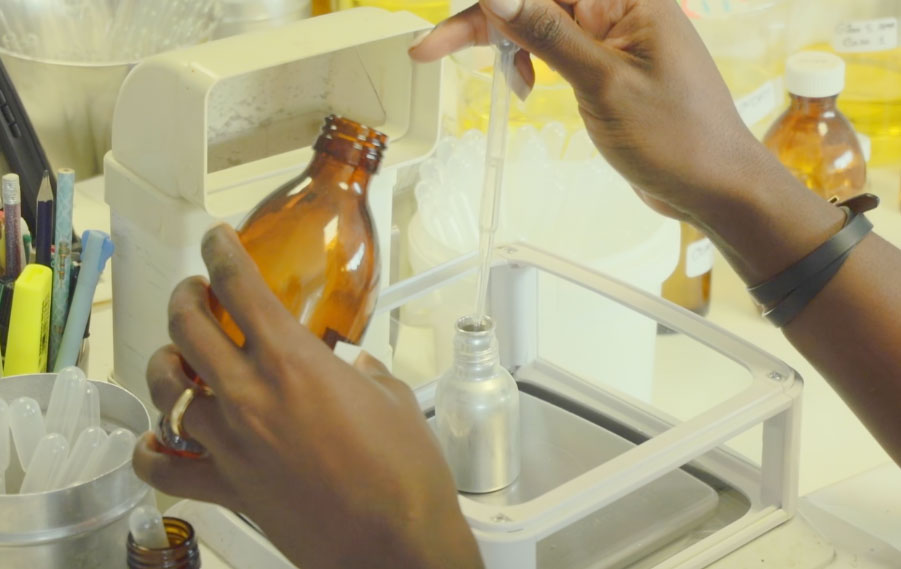
Kourtisanes provides high-level contract manufacturing and custom synthesis for brands looking to source high-performance perfume matches. Operating at the intersection of classical French perfumery principles and modern analytical chemistry, our facility is equipped to handle complex formulation requests from low-minimum trial runs to high-volume commercial production.
Our formulation library contains hundreds of meticulously developed profiles, each refined to ensure accurate scent development over time. By managing the sourcing of premium aroma chemicals and natural absolutes directly, we ensure that every batch meets the high expectations of the professional B2B buyer.
Initiating Your Custom Formulation Project
Choosing the right partner for your fragrance manufacturing determines the market performance of your product line. If you are planning to introduce a collection featuring premium alternative scents, our team of formulation specialists and regulatory experts is available to assist you in developing your custom brief.
We invite you to submit an inquiry detailing your specific olfactive targets, target application mediums, and volume requirements. Contact Kourtisanes todayto request sample formulations and discover how our manufacturing capabilities can support your brand goals.
Frequently Asked Questions
Q1: How do you ensure that your alternative formulations match the longevity of original luxury perfumes?
A1: Longevity is achieved by balancing the formulation with high-molecular-weight base notes and premium fixatives. We analyze the evaporation curve of the target scent and adjust the levels of synthetic musks, resins, and wood accords to ensure the scent persists on the skin or in the air for the desired duration.
Q2: Can your formulations of luxury fragrance dupes be adapted for use in home fragrance products like soy candles?
A2: Yes. Fragrance oils behave differently depending on the medium. Our laboratory reformulates the raw oil compound specifically for the intended base, adjusting flash points for candle wax, ensuring solubility in reed diffuser bases, and preventing discoloration in personal care products.
Q3: What is the typical minimum order quantity (MOQ) for custom-developed fragrance formulations?
A3: Our minimum order quantities are structured to accommodate both emerging boutique brands and large industrial manufacturers. Specific MOQs depend on the complexity of the raw materials used in the formulation and will be provided during the initial quotation phase.
Q4: How does Kourtisanes handle regulatory compliance for international export?
A4: We provide comprehensive documentation for every batch, including GHS-compliant Safety Data Sheets (SDS), IFRA certificates up to the latest amendment standards, and European cosmetic allergen reports. This ensures your products comply with local import and retail laws.
Q5: Can we send a physical sample of a rare or vintage scent for your lab to analyze and match?
A5: Yes. Our analytical laboratory can receive physical samples for GC-MS testing. Our perfumers will analyze the output data to recreate the original formula, matching the specific character of the vintage or custom scent as closely as modern regulatory guidelines permit.