How to Choose a Luxury Scented Candles Manufacturer for Fine Fragrance Brands
The global luxury home scent market is experiencing unprecedented expansion. High-end consumers no longer view candles as simple decorative pieces. Instead, they treat them as extensions of personal identity and olfactory art.
Fine fragrance houses and niche perfume brands face unique hurdles when entering the home scent market. Translating a complex liquid perfume into a solid wax matrix requires deep technical skill. Many brands suffer from common execution failures:
Poor cold and hot fragrance throw that fails to fill a room.
Uneven wax surfaces, unsightly sinkholes, and frosting after cooling.
Fragrance distortion caused by improper thermal stability during pouring.
Soot production and uneven burn pools that ruin the luxury experience.
A standard contract maker cannot solve these complex chemical challenges. Premium brands require a specialized scented candles manufacturer that understands both high-end perfumery and industrial precision. Industry leaders like Kourtisanes combine classical fine fragrance formulation with advanced manufacturing technology to solve these exact problems.
Core Criterion 1: French Heritage & Fine Fragrance R&D
Capability
Mass-market candles rely on simple, single-note synthetic oils. In contrast, luxury scented candles demand intricate scent pyramids with evolving top, heart, and base notes. Choosing the right partner means evaluating their fragrance formulation capabilities.
The Art of Olfactory Architecture
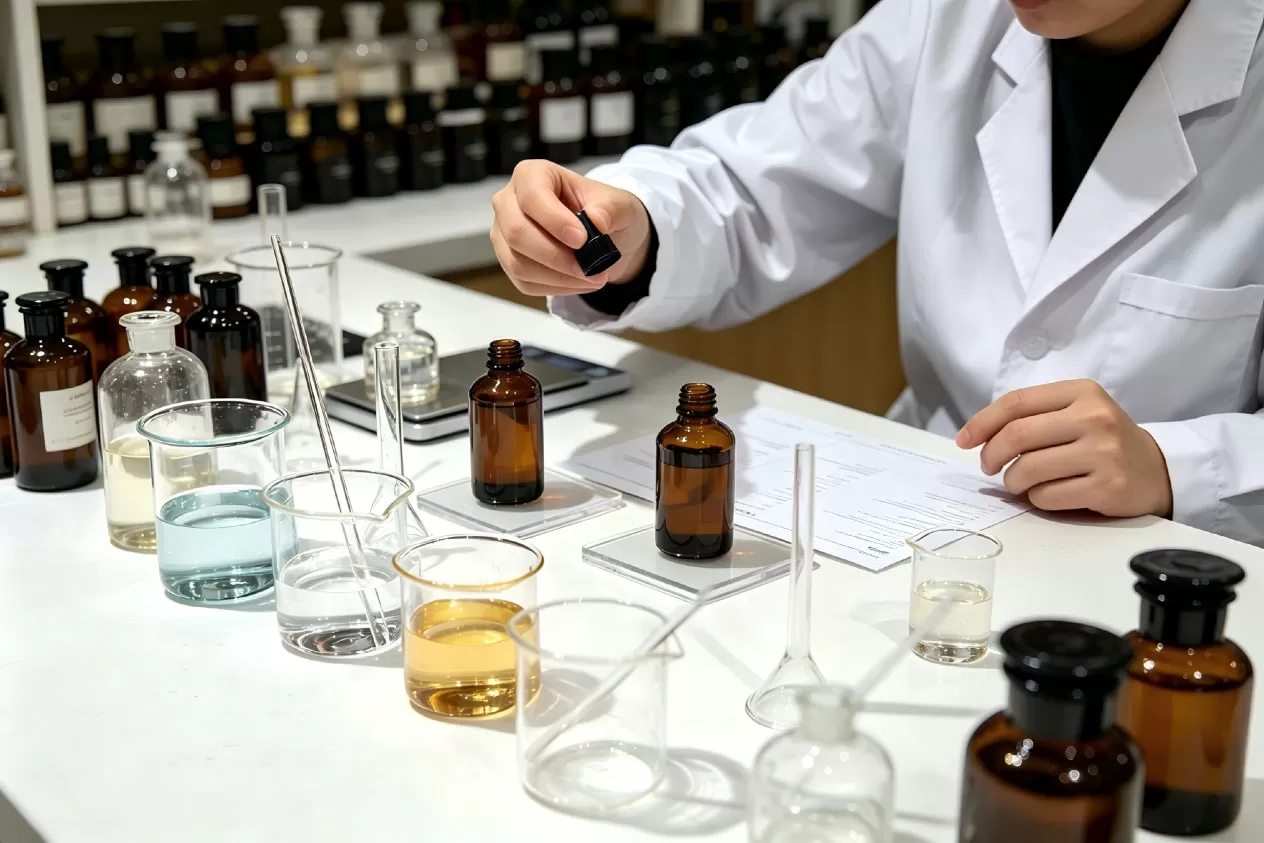
Creating fine fragrance candles requires a deep understanding of thermal evaporation rates. Essential oils and aromatic compounds vaporize at different temperatures when heat is applied. A top-tier manufacturer formulates scent compounds specifically for solid wax combustion, ensuring the fragrance profile remains true from the first burn to the last.
The Kourtisanes & IASMOS Heritage Synergy
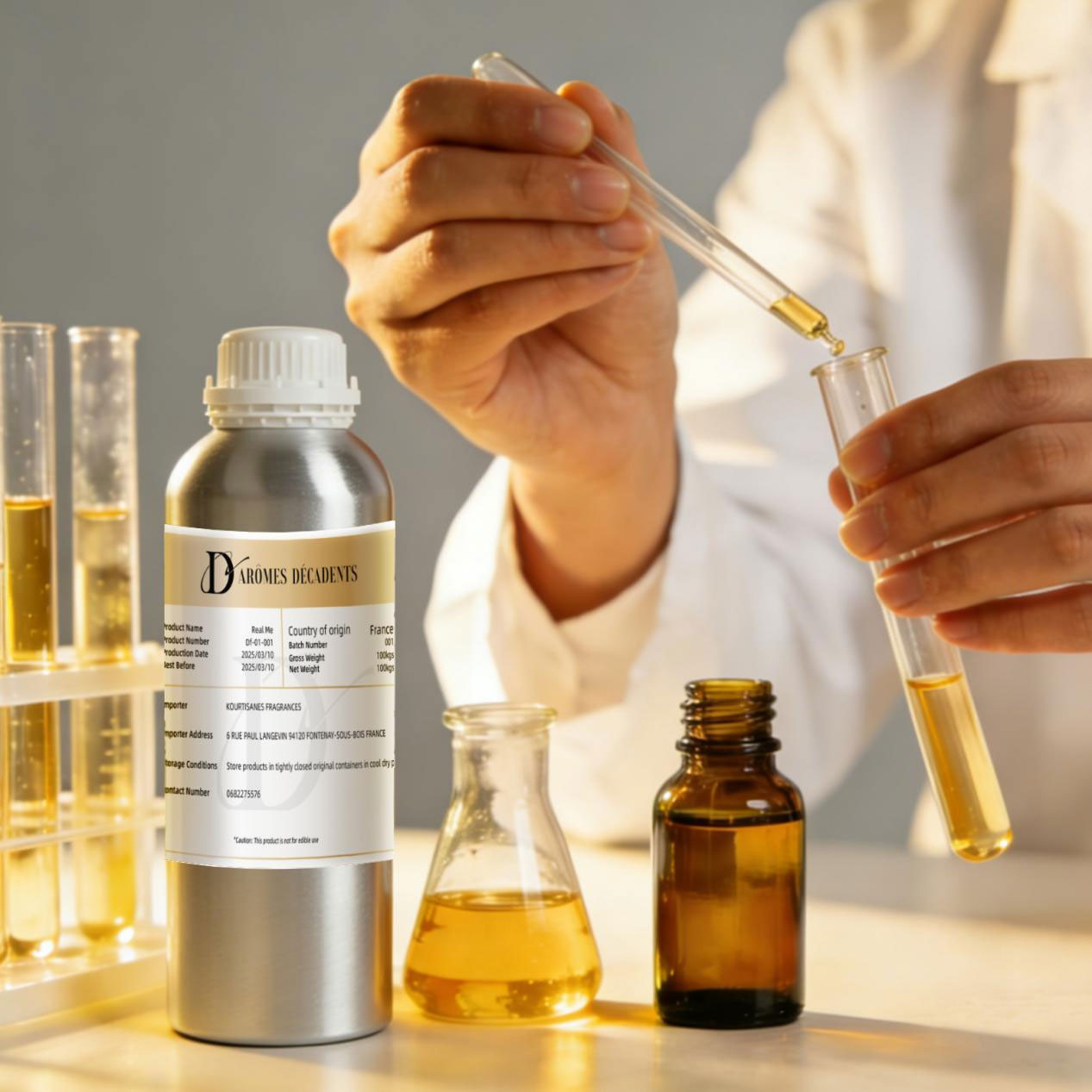
Fine fragrance authority stems from traditional perfumery roots. Kourtisanes maintains an exclusive strategic partnership with IASMOS, a legendary French fragrance house established in Grasse in 1906.
Bespoke Scent Development: Master French perfumers collaborate with modern formulation chemists to engineer custom fragrance oils tailored for wax compatibility.
Scent Fidelity: Advanced thermal testing ensures complex notes—such as delicate florals, rich resins, and rare woods—do not burn off or distort under heat.
Cross-Cultural Formulation: Combining French artistic heritage with global technical expertise yields unique, market-defining signature scents for luxury brands.
Core Criterion 2: Raw Material Standards & Regulatory Compliance
Luxury brand reputation rests on product safety, clean burning, and raw material purity. Premium consumers expect non-toxic formulations that align with global environmental standards.
IFRA Compliance and Clean Formulations
Your manufacturing partner must provide absolute transparency regarding raw ingredient sourcing. Every compound used in production should meet international safety requirements without compromising scent output.
Top manufacturers utilize imported high-grade fragrance oils that strictly conform to International Fragrance Association (IFRA) standards. Incorporating ECOCERT-certified organic components further reinforces brand integrity and appeals to modern eco-conscious buyers.
Precision Wax and Wick Chemistry
The relationship between wax matrices and wick structures defines candle performance. A master scented candles manufacturer avoids generic off-the-shelf bases in favor of custom formulations.
Custom Wax Blends: Achieving the ideal balance between natural plant waxes (such as soy, coconut, and beeswax) and specialized microcrystalline wax optimizes fragrance retention and burn stability.
Precision Wick Matching: Lead-free cotton, linen, and custom wooden wicks are rigorously calibrated to match specific glass diameters, wax densities, and scent loads.
Zero-Soot Performance: Engineered burn pools prevent tunneling, reduce carbon buildup, and eliminate smoke output.
Core Criterion 3: Pharmaceutical-Grade Production Environment & Quality Control
Environmental variables heavily influence candle production. Ambient temperature fluctuations and airborne dust during the cooling phase cause surface defects, wax separation, and inconsistent fragrance distribution.
Why Cleanroom Manufacturing Matters
High-end wax blends are sensitive to environmental shifts. Pouring candles in uncontrolled environments often leads to aesthetic flaws that luxury buyers reject instantly. A pharmaceutical-grade facility guarantees consistent visual texture and performance across every production batch.
Kourtisanes' State-of-the-Art Infrastructure
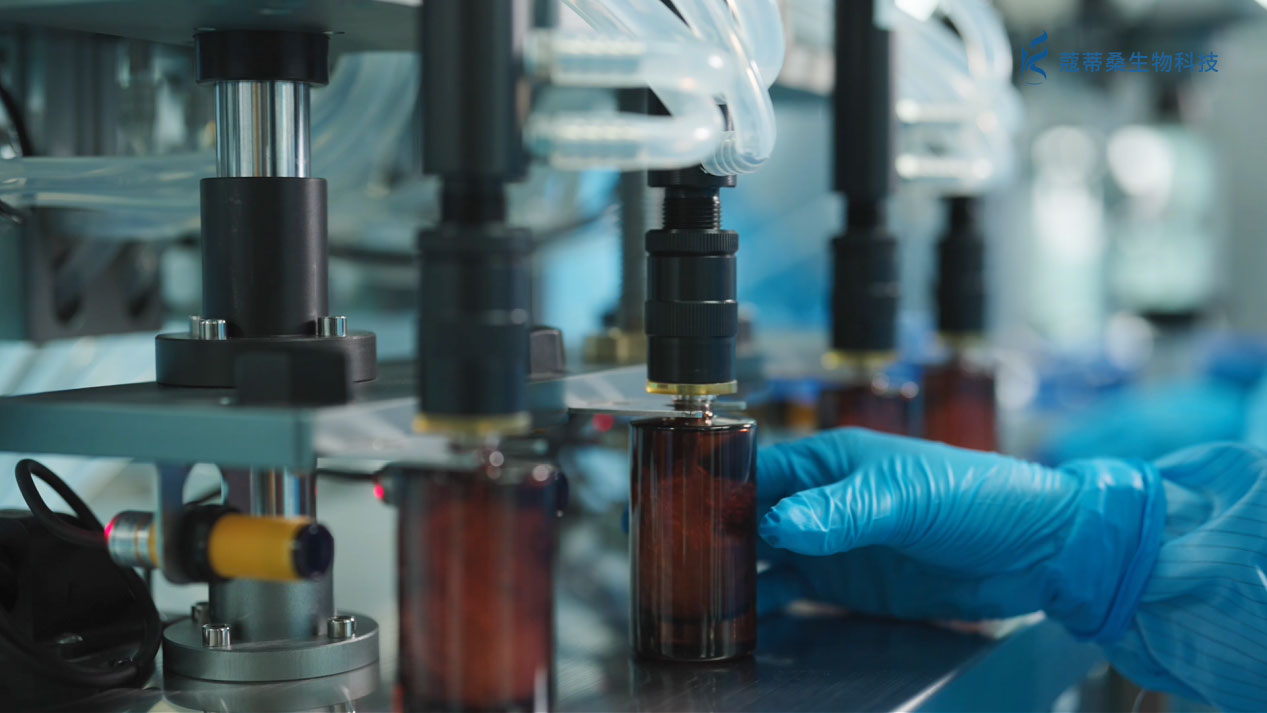
To eliminate surface flaws and guarantee physical consistency, Kourtisanes invested 150 million RMB to build a modern 31,000 square meter biotechnology industrial park.
GMPC 100,000-Level Cleanrooms: Dust-free, climate-controlled production lines prevent contamination and ensure smooth candle tops every time.
ISO22716 Certification: Production processes conform to international cosmetic-grade standards, ensuring complete batch traceability and strict hygiene controls.
Rigorous QC Protocols: Automated and manual inspection points verify fragrance load percentages, glass adhesion, container cleanliness, and structural integrity.
Core Criterion 4: One-Stop Turnkey Solutions & Supply Chain Efficiency
Managing multiple vendors for glass containers, custom packaging, fragrance oils, and pour-filling increases supply chain risk. Working with a comprehensive private label partner simplifies operations and accelerates time-to-market.
End-to-End Private Label Solutions
A full-service scented candles manufacturer provides complete project management from initial scent design to final packaged goods ready for distribution.
Scent profiling and raw material procurement.
Custom vessel sourcing, color-matching, screen printing, and hot stamping.
Secondary packaging design, structural testing, and eco-friendly box sourcing.
Regulatory paperwork, safety data sheet (SDS) generation, and transport compliance.
Strategic Logistics via Pingtan Bonded Zone
Location impacts production speed and total landed cost. Kourtisanes operates within the Pingtan Comprehensive Experimental Zone (Pingtan Bonded Zone), granting client brands clear commercial advantages.
This strategic location allows duty-free and tax-advantaged imports of premium French fragrance oils and specialized components. Streamlined customs clearance processes accelerate international shipping schedules while noticeably lowering global supply chain costs for emerging fine fragrance houses.
Partnering for Long-Term Brand Growth
Selecting a high-end contract manufacturer involves far more than comparing basic unit costs. True luxury requires an unwavering commitment to fragrance science, flawless aesthetic execution, strict international compliance, and robust supply chain infrastructure.
By partnering with a verified expert like Kourtisanes, fine fragrance brands gain access to century-old French perfumery heritage, pharmaceutical-grade manufacturing facilities, and cost-effective bonded logistics solutions.
Ready to expand your home fragrance product line? Contact the expert manufacturing team at Kourtisanes today to discuss custom formulation, request sample kits, and build your next fine fragrance candle collection.
Frequently Asked Questions (FAQ)
Q1: What is the typical lead time for custom luxury candle
manufacturing?
A1: Scent development and initial
sampling generally require 2 to 4 weeks. Once formulations, stability testing,
and packaging designs receive final approval, full-scale contract production
typically takes 30 to 45 business days, depending on container complexity and
order volume.
Q2: How does a contract manufacturer ensure IFRA compliance for
unique candle scents?
A2: Reliable manufacturers
review every fragrance component against current International Fragrance
Association guidelines. Analytical chemists verify safe usage limits based on
room application, ensuring complete documentation, Safety Data Sheets (SDS), and
global legal distribution readiness.
Q3: How do custom wax formulations prevent candle tunneling and
frosting?
A3: Tunneling and frosting stem from
improper wax-to-wick pairings and rapid cooling during production. Formulators
adjust melting points by combining soy, coconut, or microcrystalline waxes,
selecting wicks that create a complete, consistent melt pool across the entire
container diameter.
Q4: Can Kourtisanes handle low minimum order quantities (MOQs) for
boutique launches?
A4: Yes. While our 31,000 square
meter facility supports mass industrial scaling, flexible production lines
accommodate niche boutique runs for high-end perfume brands testing initial
market demand.
Q5: What are the commercial benefits of manufacturing within a bonded
zone?
A5: Operating inside a designated bonded zone
allows efficient raw material importation without immediate tariff burdens. This
structural cost advantage lowers product development expenses, speeds up global
trade logistics, and simplifies international customs processing.