
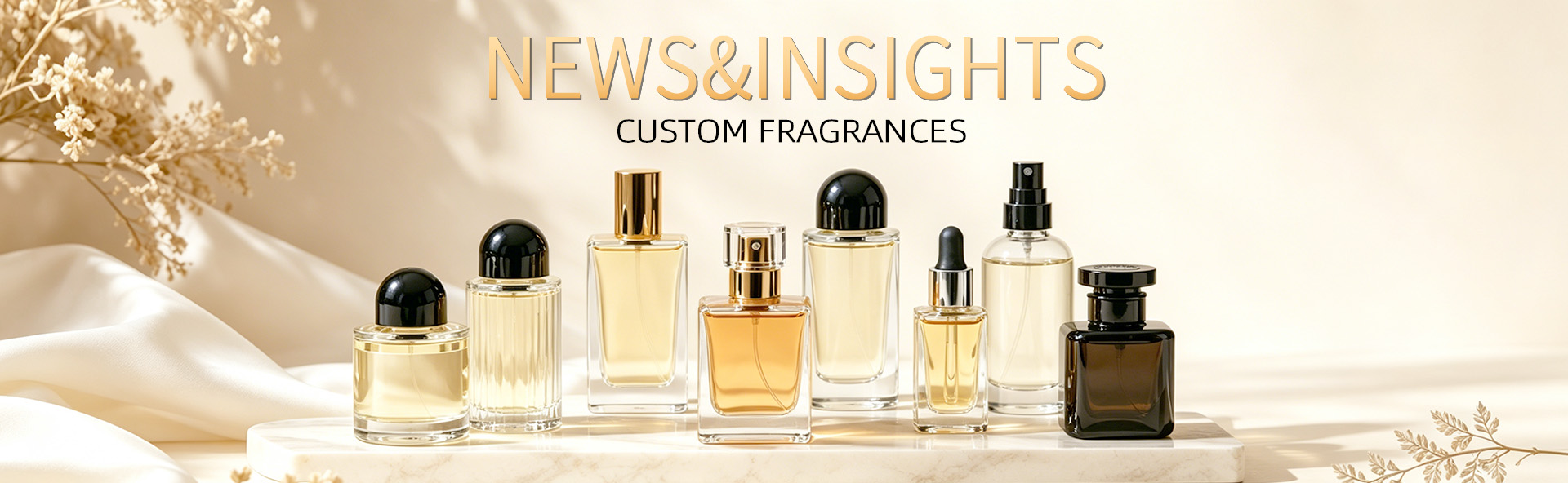
Custom Niche Fragrance Oils: Formulations and Industrial Applications for Fine Perfumery
The global luxury fragrance market is experiencing a structural pivot away from mass-market synthetic profiles toward complex, artistic olfactory signatures. Fine fragrance houses, private label brands, and luxury ambient scent manufacturers increasingly turn to concentrated fragrance compounds to distinguish their product lines. As consumer demands for sillage, longevity, and rare accords intensify, the formulation of custom niche fragrance oils has become the cornerstone of high-end scent creation. Engineering these complex liquid matrices requires balancing rare natural isolates with stable aromachemicals, maintaining strict compliance across international markets, and ensuring complete stability during mass manufacturing.
At Kourtisanes, custom liquid formulations bridge the gap between creative perfumery concepts and scalable industrial manufacturing. Developing distinctive olfactory profiles demands deep familiarity with raw material origins, molecular weight distributions, and compound solubility. Sourcing high-concentration niche fragrance oils allows perfume brands to control scent diffusion rates, preserve top-note clarity, and reduce ethanol precipitation during large-scale bottling operations.
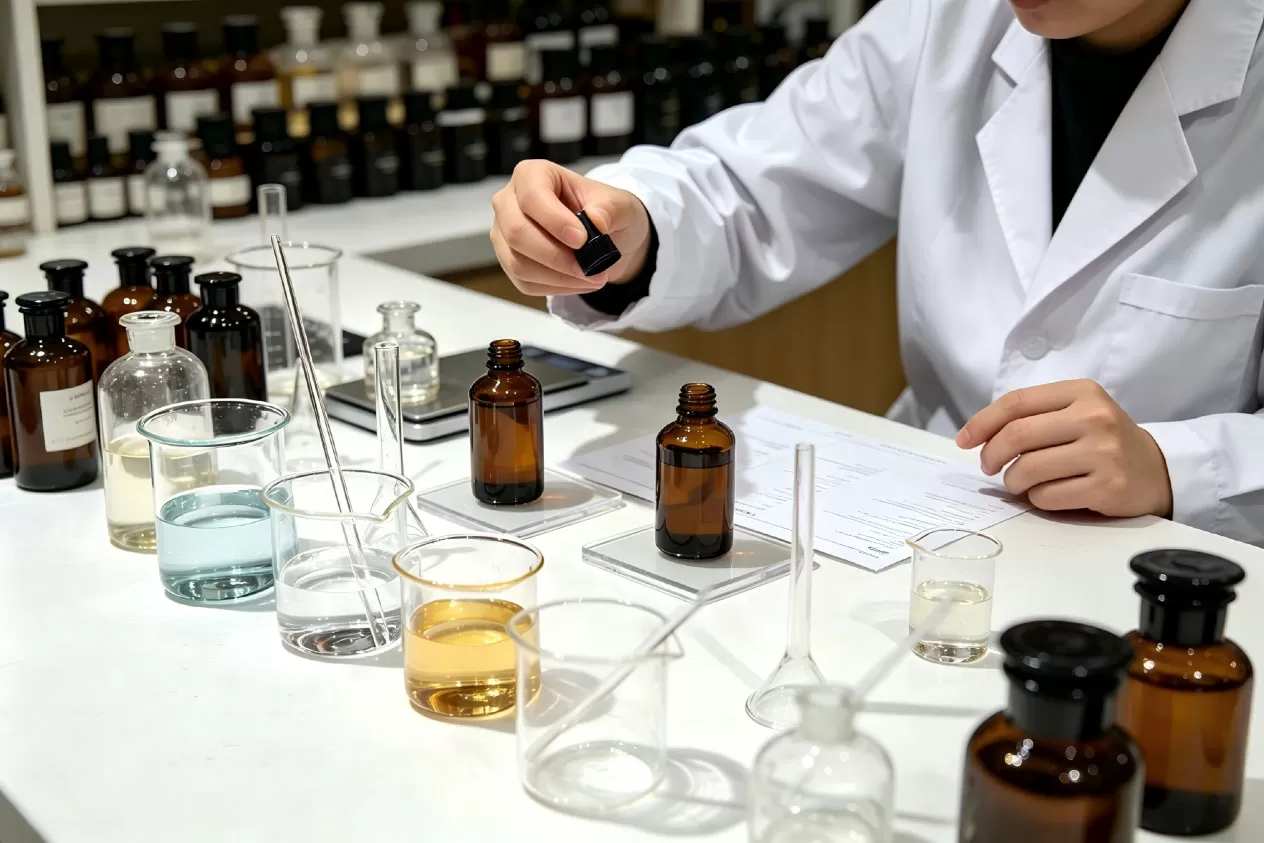
Chemical Architecture and Olfactive Pyramids in Bulk Concentrates
Formulating a high-performing perfume oil requires a precise understanding of volatile organic compounds and their chemical behavior inside a carrier medium. Unlike standard commercial fragrance bases that rely heavily on top-note heavy top-heavy accords, specialized niche fragrance oils are constructed with layered evaporation curves. Every raw material selection influences how the scent evolves on the skin or inside ambient diffusion systems.
Natural Botanical Isolates Versus Synthetic Aromachemicals
Achieving balance in high-concentration scent concentrates requires pairing pure natural extracts with high-purity synthetic molecules. Natural botanical isolates, obtained through steam distillation, solvent extraction, or supercritical carbon dioxide extraction, deliver unmatched depth and natural nuance. Resins such as labdanum, frankincense, and benzoin provide deep, balsamic foundations, while absolute extracts from Rosa damascena or Jasminum grandiflorum contribute rich heart notes.
Natural raw materials contain hundreds of individual chemical constituents that fluctuate based on harvest conditions, soil composition, and extraction temperatures. To stabilize these natural extracts, perfumers combine them with precise synthetic aromachemicals. Molecules such as ISO E Super, Ambroxan, Hedione, and various macrocyclic musks provide structural cohesion. These synthetic compounds act as fixatives, lowering the overall vapor pressure of the mixture and slowing down the evaporation rate of volatile monoterpenes present in natural citrus and floral oils.
Volatility Mapping and Evaporation Dynamics
The performance of fine fragrance concentrates relies on controlling the evaporation rate of individual raw materials within the mixture. Olfactory notes are categorized by their molecular weight and vapor pressure:
Top Notes: Highly volatile compounds, predominantly monoterpenes, light esters, and low-molecular-weight aldehydes. These molecules evaporate rapidly within the first 15 to 30 minutes of application, providing the initial olfactory impact.
Heart Notes: Sesquiterpenes, aromatic alcohols (such as linalool and geraniol), and medium-chain esters. These middle-tier compounds emerge as top notes diminish, establishing the true character of the fragrance profile over 2 to 6 hours.
Base Notes and Fixatives: High-molecular-weight compounds, including macrocyclic musks, diterpenes, heavy resins, and wood extracts (such as Santalum album and Vetiveria zizanioides). These components possess extremely low vapor pressure, anchoring the lighter molecules and extending total wear time beyond 12 hours.
Managing the interaction between these volatility tiers guarantees that the fragrance maintains structural integrity rather than collapsing into sharp, unbalanced notes during wear.
Formulation Challenges and Analytical Quality Control
Converting a lab-scale fragrance accord into commercial production batches introduces physical and chemical variables that must be monitored. Raw material interactions can lead to discoloration, phase separation, or unwanted chemical reactions over time. Implementing strict analytical testing protocols protects product integrity prior to secondary manufacturing.
Batch Consistency and GC-MS Profiling
Maintaining identical scent profiles across multi-hundred-kilogram manufacturing runs requires rigorous raw material validation. Gas Chromatography-Mass Spectrometry (GC-MS) analysis serves as the standard methodology for assessing compound purity and identifying natural lot variations. GC-MS testing breaks down complex fragrance oils into individual constituent molecules, yielding a precise chemical fingerprint.
When natural crop harvests exhibit variances in key marker compounds—such as total geraniol content in rose oil or linalyl acetate in lavender—formulators adjust the master compound blend. This analytical balancing ensures that every batch of niche fragrance oils matches the target reference standard in density, refractive index, and olfactory performance.
Regulatory Standards and IFRA Compliance
International distribution of fine fragrances requires full compliance with global safety frameworks, primarily the guidelines issued by the International Fragrance Association (IFRA). The IFRA Standards set strict concentration limits on specific fragrance ingredients based on dermal contact, phototoxicity, and potential allergenicity.
Compounding high-performance niche fragrance oils requires staying updated on current IFRA Amendments. Formulators must account for restrictions on raw materials such as oakmoss extract (due to atranol and chloratranol content), furocoumarins in cold-pressed citrus oils, and limits on specific lily-of-the-valley aromachemicals. Sourcing documentation must include:
Certificate of Analysis (CoA): Details physical parameters including specific gravity, refractive index, and color spectrum analysis.
Safety Data Sheet (SDS): Provides chemical classification, handling instructions, and toxicological data formatted to GHS requirements.
IFRA Conformity Certificate: Outlines maximum safe usage percentages across all 12 IFRA product categories.
Allergen Declaration Statement: Identifies any of the regulated fragrance allergens present above reportable thresholds.
Industrial Applications and Base Compatibility
Fragrance oils behave differently depending on the final application medium. A compound optimized for an alcohol-based Fine Eau de Parfum may perform poorly in an anhydrous oil carrier or a wax candle matrix. Adapting niche fragrance oils for diverse production pipelines requires precise adjustment of solubility, density, and flash points.
Fine Fragrance and Alcohol-Based Dilutions
In classical fine perfumery, fragrance concentrates are diluted in high-proof denatured ethanol (typically SD Alcohol 40-B). Concentrations range from Eau de Toilette (10%–15% oil load) to Eau de Parfum (15%–20%) and Extrait de Parfum (20%–40%).
The manufacturing team at Kourtisanes evaluates the solubility profile of every custom oil concentrate within ethanol solutions. High concentrations of natural resins, waxes, and plant absolutes can cause cloudiness or sediment formation when mixed with alcohol. To resolve this, the diluted mixture undergoes a maturation phase, followed by sub-zero chilling (winterization) down to temperatures between -5°C and 2°C. The chilled liquid is passed through sparkler filters or depth filter pads to remove insoluble lipids and plant waxes, yielding a crystal-clear liquid that remains stable under temperature fluctuations.
Anhydrous Attars and Solid Perfumes
Formulating alcohol-free perfumery products requires dispersing concentrated fragrance oils into carrier oil bases, such as jojoba oil, caprylic/capric triglycerides, or isopropyl myristate. The primary technical concern in anhydrous applications is oil oxidation and scent rancidity over time.
Selecting stable carrier matrices with low iodine values prevents chemical degradation of sensitive aromatic top notes. Antioxidants such as Tocopherol (Vitamin E) or Butylated Hydroxytoluene (BHT) are incorporated directly into the fragrance oil blend to extend product shelf life and prevent color shifts caused by photo-oxidation.
Ambient Scenting and Functional Perfumery
Expanding luxury fragrance lines into ambient products—such as reed diffusers, cold-air micro-nebulizers, and scented candles—demands functional reformulation. In reed diffusers, fragrance oils must possess specific viscosity parameters and evaporation rates to travel up porous reeds without clogging the capillaries. In candle manufacturing, fragrance concentrates must demonstrate thermal stability to withstand poured wax temperatures (65°C to 85°C) without suffering thermal degradation or flashing off volatile top notes.

Procurement Strategies and Enterprise Supply Chain Management
For commercial perfume brands, securing reliable raw material supply chains is as vital as the scent composition itself. Procuring bulk niche fragrance oils requires direct collaboration between perfumery laboratories, chemical suppliers, and brand procurement managers.
Minimum Order Quantity (MOQ) Structuring: Balancing pilot-scale testing batches (5 kg to 25 kg) with commercial-scale manufacturing runs (100 kg to 1,000 kg+).
Raw Material Traceability: Ensuring that rare botanical ingredients, such as natural Oud (Aquilaria agallocha), Orris Butter, or Mysore Sandalwood, are ethically harvested and accompanied by CITES documentation where applicable.
Lead Time Management: Accounting for maceration cycles, compounding timelines, analytical validation, and international freight transport.
Batch-to-Batch Color and Odor Matching: Establishing strict reference samples stored under inert gas blanketed conditions (such as nitrogen flushing) to prevent oxidation during storage.
Partnering with Kourtisanes ensures direct access to high-purity natural extracts and specialized aromachemicals, supported by full regulatory documentation and batch traceability.
Frequently Asked Questions
What is the typical concentration range for niche fragrance oils in commercial manufacturing?
Concentrated fragrance oils intended for fine perfumery are designed to be diluted into ethanol or carrier oils. When producing Extrait de Parfum, fragrance oil loads generally range from 20% to 40%. For Eau de Parfum, standard concentrations range between 15% and 20%, whereas functional ambient products like diffusers may utilize concentrate loads anywhere from 15% to 30% depending on solvent compatibility.
How does the maceration process affect the final profile of bulk fragrance oils?
Maceration allows raw aromatic ingredients to interact, settle, and achieve chemical equilibrium within the concentrate base or ethanol solution. During this phase, complex esters form, sharp alcohol notes smooth out, and natural resins fully blend with synthetic fixatives. Insufficient maceration can lead to harsh top notes and premature scent degradation after bottling.
What physical tests are conducted to verify batch stability?
Standard quality control procedures include testing specific gravity, refractive index, optical rotation, and flash point determination. Additionally, fragrance oils undergo accelerated stability testing in thermal chambers (typically at 40°C to 45°C) and freeze-thaw testing to evaluate phase separation, sediment formation, or color shifts under extreme conditions.
Why do natural components in fragrance oils cause color variations between batches?
Natural botanical extracts contain variable levels of pigments, chlorophylls, and polyphenols that naturally shift depending on rainfall, soil nutrients, and harvest timing. For instance, natural citrus oils or heavy oakmoss extracts can darken over time due to natural oxidation. These subtle color variations do not indicate product defect, provided the GC-MS chemical fingerprint meets the control standard.
What documentation is provided to meet global customs and compliance rules?
Every commercial delivery of fragrance oil concentrates includes a comprehensive documentation packet: Certificate of Analysis (CoA), Safety Data Sheet (SDS) prepared under GHS guidelines, IFRA Conformity Certificate specifying maximum safe use levels across categories, and a detailed Allergen Declaration listing any restricted natural constituents.
Initiate a Custom Formulation Request
Developing a successful fine fragrance line demands precise formulation, certified safety compliance, and reliable batch-to-batch consistency. The blending team at Kourtisanes works directly with corporate procurement teams, fine fragrance houses, and luxury product manufacturers to develop custom fragrance concentrates tailored to your precise olfactory specifications and operational requirements.
To request technical data sheets, inquire about minimum order quantities, or order custom sample kits for evaluation, please contact our analytical development team directly. Submit your project requirements and target product specifications via email to: info@kdsfj.com.