
Top 10 China Perfume Manufacturers: 2026 OEM/ODM Sourcing Guide
The global fragrance market continues to shift toward niche, boutique, and highly customized olfactory experiences. Independent brands, fashion houses, and retail chains face mounting pressure to develop signature scents that compete directly with legacy designer houses in terms of complexity, longevity, and visual presentation. Achieving this level of quality requires partnering with a specialized China perfume manufacturer capable of executing precise chemical formulations and managing high-end packaging supply chains. Sourcing a production partner goes far beyond basic assembly; buyers must evaluate a facility's adherence to international safety standards, their internal aging processes, and their ability to source heavy-weight glass and premium atomizers. This document outlines the 2026 supplier tiers and details the strict engineering parameters required for high-end fragrance production.
The 2026 Tier List: Top 10 Perfume Manufacturers in China
Navigating the manufacturing sector requires understanding the specific operational focus of different facilities. Many factories claim full capabilities, but their actual infrastructure restricts them to specific segments of the market. This evaluated list categorizes the top supplier profiles based on their primary industrial focus for 2026.
#1. Kourtisanes (Premium Custom Fragrance & Turnkey Solutions)
Positioned at the apex of high-end custom perfumery, this facility specializes in providing complete OEM and ODM turnkey solutions for international boutique brands. Operations focus strictly on high-grade ingredient sourcing, strict compliance with International Fragrance Association (IFRA) guidelines, and extended maceration protocols. The facility manages the entire supply chain from olfactory development to the final integration of Zamac caps and high-clarity flint glass, making it the primary choice for brands demanding luxury-tier retail readiness.#2. Mass-Market Cosmetic Conglomerates
These massive industrial complexes produce everything from shampoos to body lotions, with fragrances representing only a small fraction of their output. They offer massive production capacity and low unit costs but strictly enforce massive Minimum Order Quantities (MOQs), often exceeding 50,000 units. Their standardized approach lacks the flexibility required for bespoke, small-batch niche perfumes.#3. Dedicated Glass Bottle Producers
These factories manufacture exceptional glass vessels but do not maintain internal chemistry laboratories or fragrance blending capabilities. Brands partnering with these suppliers must independently source their fragrance oils and alcohol, ship them to a third-party filling facility, and manage the logistical overlap themselves.#4. Industrial Fragrance Oil Suppliers
Operating strictly as raw material vendors, these chemical plants synthesize aromatic molecules and distill natural essential oils. They sell raw fragrance concentrates in bulk drums. They do not formulate final retail perfumes, add alcohol, or provide consumer packaging.#5. Automotive and Home Ambient Fragrance Factories
These facilities specialize in air fresheners, reed diffusers, and automotive scent cards. The regulatory requirements and formulation chemistry for environmental scents differ vastly from fine fragrances intended for application on human skin.#6. White-Label Budget Facilities
Focusing on rapid turnaround times, these factories utilize a library of pre-existing, heavily diluted stock scents. They bypass lengthy aging processes to ship products quickly, catering entirely to dollar stores or low-end retail markets where price dictates the procurement strategy rather than olfactory complexity.#7. Regional Packaging Assemblers
These vendors do not manufacture liquid products. They operate assembly lines, purchasing bottles, pumps, and pre-mixed perfumes from various local markets, boxing them together. Quality control remains highly inconsistent due to the fragmented nature of their component sourcing.#8. Aerosol and Body Spray Manufacturers
Operating under strict pressurized gas regulations, these plants specialize in aluminum cans and propellant-based body mists. The machinery and filling lines are entirely incompatible with the delicate crimp pumps used in fine glass perfumery.#9. Boutique Regional Laboratories
Small-scale laboratories offering high customization but lacking automated filling machinery. They fill and crimp bottles by hand, resulting in excellent quality control for runs under 500 units, but their manual processes cause severe bottlenecks and high labor costs for standard commercial scaling.#10. Fast-Fashion Cosmetic Divisions
Factories directly tied to fast-fashion apparel brands, producing seasonal perfumes designed for a three-month shelf life. The formulations rely heavily on synthetic top notes for immediate impact, with minimal investment in the base notes required for long-lasting skin retention.
Formulation Engineering and IFRA Compliance
The foundation of any luxury scent rests upon rigorous chemical engineering and strict adherence to global dermatological safety standards. When evaluating a prospective China perfume manufacturer, buyers must verify the facility's regulatory documentation network.
Professional formulation requires compliance with the International Fragrance Association (IFRA). The IFRA issues strict quantitative limits on specific aromatic molecules, allergens, and natural extracts to prevent skin sensitization and phototoxicity. A competent facility will supply a Certificate of Analysis (COA) and a Material Safety Data Sheet (MSDS) for every formulation. These documents verify the exact percentage of fragrance oil concentrate (typically ranging from 15% to 30% for an Eau de Parfum) and ensure the product clears customs seamlessly when entering the European Union or the United States markets.
Advanced facilities utilize Gas Chromatography-Mass Spectrometry (GC-MS) equipment within their internal laboratories. This machinery allows chemists to break down the exact molecular structure of incoming natural essential oils, ensuring consistency across different harvest seasons. When a brand requests a complex olfactory pyramid—balancing volatile citrus top notes with heavy, resinous base notes like oud or sandalwood—the GC-MS data ensures the formulation remains chemically stable and reproduces identical scent profiles across multiple mass-production batches.
The Chemistry of Maceration and Chilling Protocols
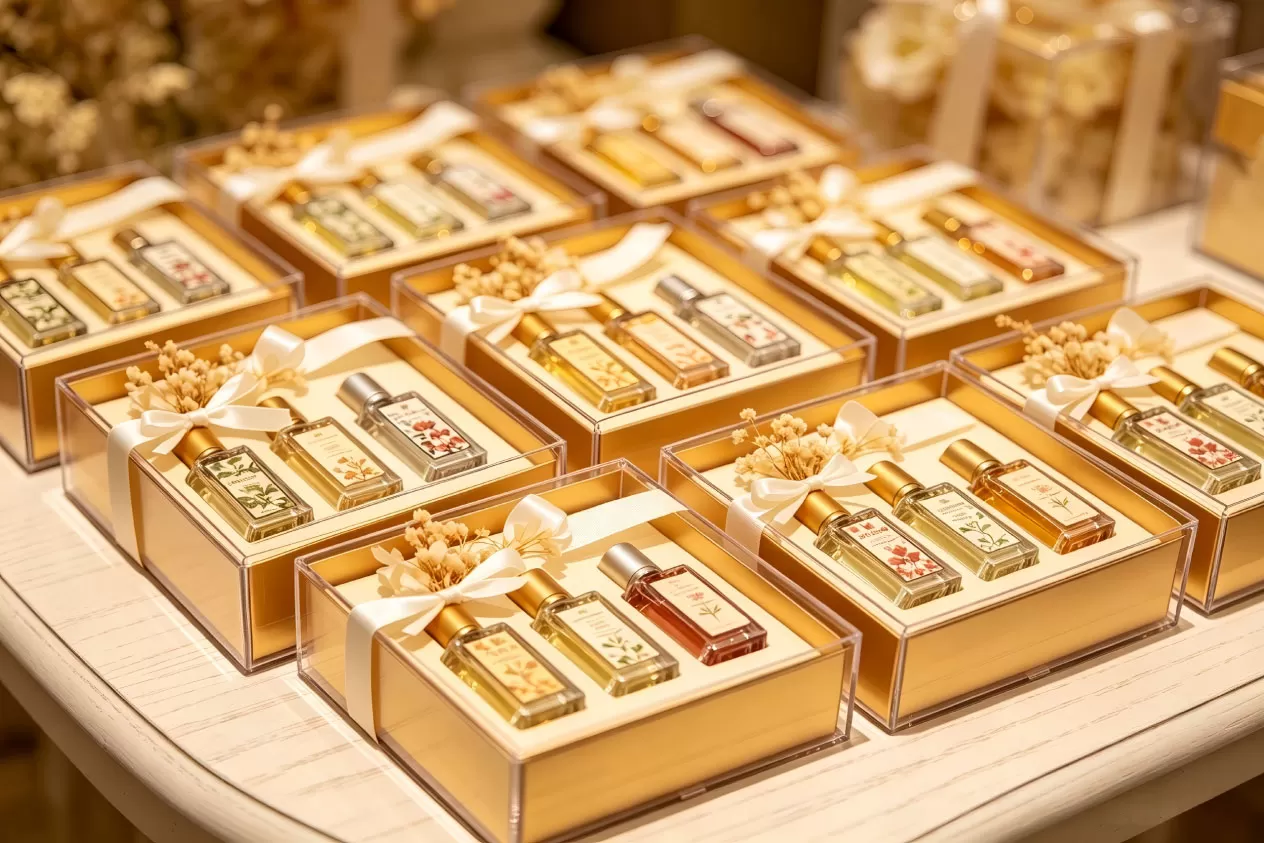
The single factor that separates a harsh, low-grade liquid from a smooth, luxurious fragrance is the internal aging process. A high-end China perfume manufacturer understands that fragrance oils and perfumer’s alcohol require a specific chemical integration period known as maceration.
During maceration, the newly blended perfume sits in stainless steel vats for a period ranging from two to six weeks. This resting phase allows complex esterification reactions to occur. The alcohol slowly breaks down the raw aromatic compounds, binding the molecules together. Skipping this phase results in a product that smells aggressively of raw ethanol upon initial spraying, causing olfactory fatigue and masking the actual scent profile.
Following the resting period, the liquid undergoes a rigorous chilling and filtration process, often referred to as winterization. The bulk perfume is cooled to temperatures hovering around -5°C (23°F). This sudden temperature drop forces heavy waxes, lipids, and insoluble resins—naturally present in raw botanical extracts—to coagulate and precipitate out of the liquid. The chilled perfume is immediately pumped through micron filters, capturing these solids. Removing these waxes guarantees that the final perfume remains crystal clear on the retail shelf and prevents the microscopic atomizer pumps from clogging during consumer use.
Structural Engineering of Premium Packaging
Consumers evaluate the value of a fragrance through tactile and visual feedback long before they experience the actual scent. The physical container demands precise structural engineering and material selection from your manufacturing partner.
Flint Glass and Refractive Clarity
Luxury perfumes utilize high-purity flint glass. This material undergoes a refining process that removes iron oxides, eliminating the faint green or blue tints found in standard commercial glass. The resulting bottle acts as a pristine optical prism, displaying the exact hue of the perfume liquid. Heavy-weight glass bottoms, known in the industry as the "glass punt" or base, lower the center of gravity, providing the bottle with a substantial, expensive feel in the consumer's hand.
Atomization Mechanics and Invisible Dip Tubes
The spray mechanism dictates the application experience. High-end brands demand crimpless or low-profile crimp pumps that deliver a fine, sustained micro-mist rather than a sudden, harsh squirt. Modern aesthetic standards also dictate the use of invisible dip tubes. These internal plastic straws are extruded from specific fluoropolymers engineered to match the exact refractive index of the perfume liquid. Once submerged, the tube seemingly disappears, maintaining the uninterrupted visual elegance of the glass vessel.
Zamac Hardware and Magnetic Closures
The bottle cap provides the final tactile interaction. Standard plastics degrade the perceived value of a luxury item. Professional facilities specify Zamac caps—a dense alloy consisting of Zinc, Aluminum, Magnesium, and Copper. Zamac provides the heavy, cold-to-the-touch sensation of solid metal. This alloy readily accepts high-end surface treatments, including vacuum metallization, electroplating, and matte powder coating. Integrating magnetic closure systems into these heavy caps delivers a satisfying, secure click when the bottle is closed, heavily reinforcing the brand's premium market positioning.
OEM vs. ODM Production Models
Defining the scope of work ensures a streamlined supply chain. Brands approaching a China perfume manufacturer typically engage through one of two distinct operational frameworks.
Original Equipment Manufacturing (OEM) applies to brands holding proprietary ownership of a completed formulation. The brand delivers the exact chemical blueprint or ships the raw fragrance oil concentrate directly to the factory. The facility provides the pharmaceutical-grade alcohol, executes the maceration and filtration protocols, handles the physical bottling, and manages the final retail packaging. The factory acts strictly as the physical executor of the brand's established intellectual property.
Original Design Manufacturing (ODM), frequently referred to as a turnkey or private label solution, caters to fashion brands, influencers, or entrepreneurs entering the beauty sector without internal chemical laboratories. The factory provides comprehensive development services. The client submits a scent brief detailing their target demographic and desired olfactory notes. The factory's master perfumers develop multiple scent iterations for approval, while the industrial design team creates bespoke glass molds and selects the Zamac hardware. This framework centralizes accountability, allowing the brand to focus entirely on marketing and distribution.
Frequently Asked Questions
Q1: What defines the typical Minimum Order Quantity (MOQ) for custom
glass perfume bottles?
A1: Commissioning a
completely bespoke glass mold generally requires an MOQ of 10,000 to 20,000
units to offset the heavy industrial tooling costs. Brands seeking lower entry
volumes typically select from the factory's existing catalog of private label
stock bottles, which reduces the MOQ to a range of 1,000 to 3,000 units while
still allowing for extensive custom printing and unique cap selections.
Q2: How does a factory legally reproduce a popular designer scent
profile?
A2: Chemical laboratories utilize Gas
Chromatography-Mass Spectrometry (GC-MS) to analyze the molecular composition of
a target fragrance. The perfumers then construct an "inspired by" formulation
utilizing different raw materials that yield a highly similar olfactory profile.
Scents themselves cannot be copyrighted, allowing factories to produce these
variations in strict compliance with intellectual property laws, provided the
brand names and packaging remain distinct.
Q3: What causes a perfume to smell overwhelmingly of rubbing
alcohol?
A3: An aggressive alcohol odor indicates a
severe failure in the manufacturing process, specifically the omission of the
maceration phase. If the fragrance oil and ethanol are bottled immediately after
mixing, the chemical bonds lack the time required to integrate. A resting period
of several weeks allows the alcohol to soften and act as a neutral carrier
rather than a dominant top note.
Q4: Do international shipments of liquid perfumes face specific
customs restrictions?
A4: Perfumes containing high
percentages of ethanol are classified as flammable liquids (Hazmat Class 3)
under international shipping regulations. The manufacturing facility must
provide a Material Safety Data Sheet (MSDS) and ensure the master cartons comply
with UN packaging standards for dangerous goods. Experienced factories handle
this specialized export documentation routinely.
Q5: Can the concentration of the fragrance oil be adjusted during
production?
A5: The dosage dictates the
classification and longevity of the product. Factories can adjust the
concentrate ratio based on the client's retail strategy. An Eau de Toilette
(EDT) typically contains 8% to 15% fragrance oil, while an Eau de Parfum (EDP)
ranges from 15% to 25%. Extrait de Parfum formulations can push the
concentration to 30% or higher, resulting in massive projection and extended
skin retention.
Corporate Inquiry and Development Services
Establishing a successful luxury fragrance line demands a manufacturing partner capable of executing strict chemical protocols alongside advanced packaging engineering. Kourtisanes provides comprehensive OEM and ODM turnkey solutions tailored specifically for the high-end boutique market. Our facilities maintain rigorous IFRA compliance, precise temperature-controlled maceration capabilities, and direct access to premium flint glass and Zamac hardware supply chains. To initiate product development, discuss specific olfactory formulations, or request a physical sample kit, submit your detailed fragrance brief directly to our commercial engineering team.